1. Opening – Straight Into It
Pineapple fried rice is one of those dinners I fall back on when I’ve hit the point where deciding what to cook feels harder than actually cooking. It usually shows up mid-week for me, somewhere between real effort meals and toast-for-dinner territory. I make it when I’ve got cooked rice in the fridge, a few vegetables floating around, and zero interest in learning anything new that night.
It works because it doesn’t ask much of me. It’s mostly chopping, tossing things into a pan, and letting heat do the rest. Once I start, I don’t have to keep checking instructions or wondering if I’ve forgotten something important. The sequence stays the same every time. Rice. Bits and pieces. Sauce. Stir. Done.
I first started making it because I kept ending up with leftover rice that I didn’t want to waste but also didn’t want to turn into another bowl of reheated plain rice. Pineapple ended up in there mostly because I had a tin sitting in the cupboard and wanted to use it. It stuck around because it balances everything out without me having to measure flavours too carefully.
Now it sits in my regular dinner rotation as a meal that lets me cook without thinking too hard. I know roughly how long it takes. I know what it looks like when it’s done. I know how it behaves the next day. That’s usually enough.
Most nights I make it, I’m already tired by the time I start chopping anything. Sometimes it’s warm outside and I want something that cooks quickly without heating the kitchen too much. Sometimes it’s cold and I just want something hot that comes together in one pan. It handles both without needing adjustments.
I don’t cook this because it’s exciting. I cook it because it’s reliable, and reliability matters more than novelty when it’s 6:30pm and I’ve already used up my decision quota for the day.
2. How This Fits Into My Week
This usually lands somewhere in the Wednesday or Thursday slot for me. Early in the week I tend to cook things that involve a bit more planning or longer cooking times. By mid-week, that energy disappears pretty quickly. Pineapple fried rice fills that gap where I still want something homemade, but I’m not up for anything fiddly.
It also depends on whether I’ve made rice earlier in the week. If I’ve done a curry or something that leaves me with leftover rice, I already know pineapple fried rice is happening the next night or two. It gives leftover rice a job, which stops it sitting in the fridge until I feel guilty enough to throw it out.
I keep coming back to it because the ingredient list overlaps with a lot of other meals I make. Frozen peas, carrots, capsicum, spring onions, eggs, soy sauce — all stuff that’s usually around anyway. Pineapple is either from a tin or sometimes half a fresh one if I’ve bought it for something else. Nothing about it requires a special shop or a mental checklist.
Energy-wise, this is low to medium effort. The chopping is basic. The cooking is quick. Once the pan is hot, everything moves along fairly fast. I don’t need to babysit it like a sauce or keep adjusting temperatures constantly. That matters on nights when my brain is running on leftovers.
I also like that it’s flexible with quantity. If I’m cooking for just myself, I use one bowl of rice and scale everything else down without measuring. If there are more people or I want leftovers, I double it. It behaves predictably either way.
It’s one of those meals where I don’t have to ask myself “What do I feel like eating?” I just know it works, and that’s usually enough to get dinner moving.
3. Ingredients (Routine-Based)
What I Always Keep
There are a few things I pretty much always have because they show up in multiple meals during the week.
Cooked rice is the main one. I don’t cook rice specifically for fried rice anymore. I just make extra rice whenever I cook rice for something else. It lives in the fridge and becomes this meal later.
Eggs are another staple. They add bulk and protein without needing any extra prep beyond cracking them into the pan. I rarely skip them because they make the meal feel complete without extra work.
Soy sauce stays in constant rotation in my kitchen. It’s the main seasoning here. Sometimes I add a splash of oyster sauce or fish sauce if it’s nearby, but soy sauce alone still works fine.
Garlic is usually around. If I’ve run out, I use jarred garlic or garlic paste and don’t stress about it.
Frozen peas and carrots are a regular in my freezer. They go straight into the pan without thawing, which saves time and mental effort.
Spring onions usually sit in the crisper drawer. If they’re there, they go in. If not, I ignore them.
Cooking oil is whatever neutral oil is sitting next to the stove.
What I Swap Without Thinking
Pineapple is the biggest flexible ingredient. Most of the time I use canned pineapple pieces because they’re consistent and require zero prep. If I’ve got fresh pineapple already cut up, I’ll use that instead. I don’t change anything else.
Vegetables rotate constantly. Capsicum, corn, broccoli stems, snow peas, or leftover roast veg all end up in here. The rice doesn’t really mind.
Protein is optional. Sometimes I add leftover chicken, cooked prawns, or tofu. Sometimes it’s just eggs. It depends on what’s already in the fridge rather than planning ahead.
Rice type doesn’t matter much. Jasmine rice is common in my house, but long grain or medium grain still works. I avoid freshly cooked rice because it turns mushy, but if that’s all I’ve got, I spread it on a tray for a bit to cool down.
What I Don’t Bother With Anymore
I used to measure sauces carefully. I don’t anymore. I add small splashes and taste once near the end.
I used to try including fancy garnishes like toasted nuts or herbs every time. Now I only add them if they’re already out for another meal.
I also stopped using multiple sauces that required me to keep track of ratios. Too many bottles equals too much thinking.
4. Cooking Flow (Autopilot Style)
The first thing I do is pull the rice out of the fridge. Cold rice is easier to separate and stops everything turning sticky later. I break it up slightly with my hands or a spoon while the pan heats.
I chop whatever vegetables I’m using into small, roughly even pieces. Nothing precise. Small enough that they cook quickly.
The pan goes on medium-high heat. I use a large frying pan or wok if it’s clean. If it’s not, the frying pan wins because I’m not washing another dish just for authenticity.
Oil goes in first. Once it looks slightly shimmery, garlic goes in. I give it about thirty seconds until it smells like dinner has started.
Vegetables go in next, starting with anything firm like carrots or broccoli stems. Softer vegetables follow a minute later. I stir them around until they look slightly softened but not floppy.
If I’m adding extra protein like chicken or tofu, it goes in now if it’s already cooked. I just warm it through.
The rice goes in next. I add it in chunks and break it up with the spatula. This part takes a couple of minutes while I toss everything together.
I push everything to one side of the pan and crack the eggs into the empty space. I scramble them lightly, then mix them through once they’re mostly set.
Pineapple goes in toward the end. I don’t cook it too long because it can get watery. Just enough to heat through and lightly caramelise around the edges if the pan is hot enough.
Soy sauce gets drizzled around the edges of the pan rather than directly onto the rice. I picked that up after noticing it distributes better that way. I toss everything until the rice looks evenly coloured.
Spring onions go in last if I’m using them.
Then I stop. Overcooking fried rice usually makes it worse, not better.
Visual and Timing Cues
Rice should look separated, not clumped.
Vegetables should still have a bit of colour.
Egg should look set but still soft.
Pineapple should look slightly golden on the edges if possible.
If steam is rising strongly and the pan sounds dry, it’s usually ready.
Mistakes I’ve Made Before
Using fresh hot rice.
It turned into sticky rice mash. Now I only use cold rice or cooled rice.
Adding pineapple too early.
It released too much liquid and made everything soggy. Now it goes in late.
Overcrowding the pan.
Everything steamed instead of frying. Now I cook in batches if needed.
Adding too much soy sauce at once.
The rice went overly salty and dark. Now I add small amounts and taste near the end.
Not heating the pan enough before starting.
Ingredients stuck and cooked unevenly. Now I let the pan heat properly before adding oil.
What I Now Do Automatically
I break up the rice before it hits the pan.
I keep ingredients prepped before turning the heat on.
I taste once right before finishing and adjust seasoning then, not earlier.
I stop stirring occasionally to let the rice catch some heat from the pan.
5. Tweaks I’ve Settled On
Over time, I’ve made small adjustments that stuck because they made the process smoother rather than fancier.
Adding a small splash of pineapple juice from the tin is one tweak I kept. Not much, just enough to help distribute sweetness evenly. Too much turns it watery, so I’m careful with it.
Cooking the eggs directly in the pan rather than separately is another change that stuck. It saves a dish and still tastes the same to me.
Using frozen vegetables instead of fresh most nights also stayed. They’re already chopped and consistent, which removes a step.
Changes That Didn’t Stick
I tried adding multiple sauces together — fish sauce, oyster sauce, and soy sauce in precise ratios. It tasted fine but required remembering amounts, which defeats the purpose of this meal.
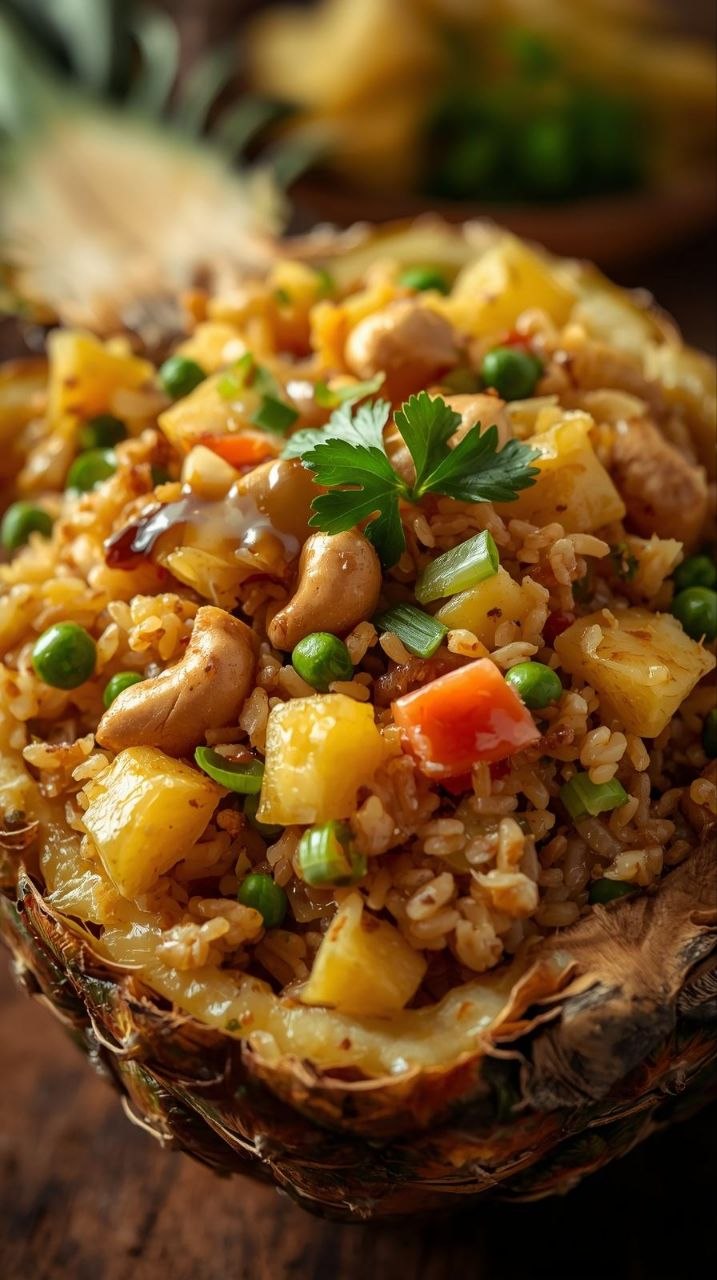
I also tried serving it in pineapple halves once. It looked nice but required extra prep and cleanup. It didn’t change the eating experience enough to justify repeating it.
Using fresh pineapple every time didn’t stick either. It’s good, but canned pineapple is predictable and always available.
Lazy Version vs Slightly Better Version
Lazy Version:
Frozen vegetables, canned pineapple, leftover rice, soy sauce, eggs. Everything cooked in one pan quickly.
Slightly Better Version:
Fresh vegetables, fresh pineapple, adding leftover roast chicken or prawns, finishing with fresh herbs or lime.
Both versions work. The difference is mostly about what happens to already be in the fridge.
6. Leftovers & Reuse
Pineapple fried rice keeps reasonably well. I usually store leftovers in an airtight container in the fridge and eat them within two days.
It reheats best in a frying pan rather than the microwave because the rice separates again and doesn’t go as soft. If I do use the microwave, I stir halfway through to stop cold spots.
The pineapple holds up fine overnight. It doesn’t go weird or mushy unless it was overcooked the first time.
I avoid reheating it more than once. Rice can dry out or develop an odd texture after multiple reheats.
Sometimes leftover fried rice becomes a quick lunch the next day with a fried egg on top. That’s about as far as I take repurposing it. It doesn’t need much reinvention.
7. Common Questions
Can I use freshly cooked rice?
Yes, but it helps to cool it first. Spread it on a tray for 20–30 minutes if you’re short on time.
Can I skip the egg?
Yes. The texture will be slightly different but still works.
Do I have to use pineapple?
No. The base fried rice still works without it.
Can I make it vegetarian?
Yes. Just skip meat and use vegetarian sauces.
How do I stop rice sticking to the pan?
Make sure the pan is properly heated and use enough oil.
8. Wrap-Up
Pineapple fried rice stays in my dinner rotation because it removes the need to think too hard about what to cook when I’m already tired. It uses ingredients that are usually sitting around anyway. It cooks quickly. It doesn’t punish small mistakes.
I like meals that don’t change depending on mood or energy levels. This one behaves the same whether I’m fully awake or running on autopilot. Once I start cooking, muscle memory does most of the work.
It also solves the leftover rice problem without creating extra work. That alone keeps it showing up regularly.
It’s not something I make to impress anyone. It’s something I make because I know exactly how the evening will go if I do. And most nights, predictable dinner is enough.
RECIPE CARD
Pineapple Fried Rice
Prep Time: 10 minutes
Cook Time: 15 minutes
Total Time: 25 minutes
Serves: 2–3
Ingredients
- 3 cups cooked and chilled rice
- 1 cup pineapple pieces (fresh or canned, drained)
- 2 eggs
- 1 cup mixed vegetables (peas, carrots, capsicum, corn, or similar)
- 2 cloves garlic, minced (or 1 teaspoon garlic paste)
- 2–3 tablespoons soy sauce
- 2 tablespoons cooking oil
- 2 spring onions, sliced (optional)
- 1 cup cooked protein such as chicken, prawns, or tofu (optional)
Instructions
- Heat a large frying pan or wok over medium-high heat.
- Add cooking oil and heat until shimmering.
- Add garlic and cook for 30 seconds until fragrant.
- Add mixed vegetables and cook for 2–3 minutes until slightly softened.
- Add cooked protein if using and heat through.
- Add chilled rice and break up clumps while stirring.
- Push rice mixture to one side of the pan. Crack eggs into empty space and scramble until mostly cooked.
- Mix eggs through the rice.
- Add pineapple pieces and cook for 1–2 minutes.
- Drizzle soy sauce around the edges of the pan and stir to combine evenly.
- Add spring onions if using and stir briefly.
- Serve hot.
Notes
- Cold rice produces the best texture.
- Adjust soy sauce to taste.
- Cook in batches if the pan becomes overcrowded.
- Store leftovers refrigerated for up to 2 days.