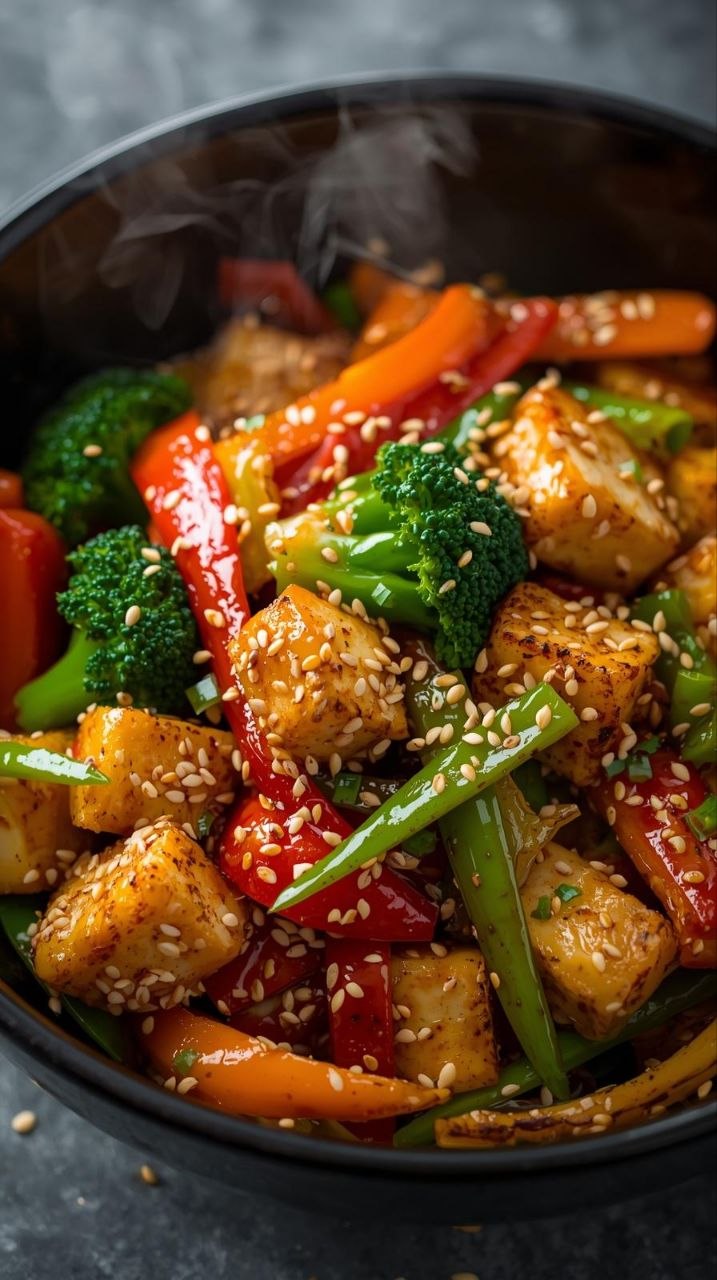
1. Opening – Straight Into It
Vegetarian stir fry is one of those dinners I fall back on when it’s already been a full day and I don’t want to negotiate with myself about what to cook. It sits in that category of meals where I already know what pan I’m grabbing, which chopping board I’m pulling out, and roughly how long it’ll take before I’m eating. I don’t check recipes anymore. I just start moving vegetables around and it usually works out the same each time.
I make this mostly on weeknights when the afternoon has run longer than planned or the weather’s either too warm to bother with the oven or too muggy to stand around thinking. It’s especially useful when I’ve still got random vegetables in the crisper that need using but I don’t want to turn it into some complicated “use-up meal” that ends up taking longer than takeaway would.
The main reason I keep coming back to vegetarian stir fry is because it removes decision-making. I don’t need exact vegetables. I don’t need exact sauce measurements. I don’t even need exact timing as long as I follow the same general order. It’s predictable in a way that suits tired evenings. I know it’ll be done quickly, I know it’ll be filling, and I know it won’t create a mountain of dishes that I’ll regret later.
Some nights I serve it with rice because I’ve got leftovers in the fridge. Other nights it goes over noodles or even just on its own if I can’t be bothered. It’s flexible enough that it fits whatever state my kitchen and energy level are in.
2. How This Fits Into My Week
This sits somewhere in the middle of my weekly dinner rotation. It’s not the absolute quickest meal I make, but it’s the one I lean on when I’ve got vegetables to use and I want dinner to feel organised without needing planning.
I usually end up cooking this once every week or two, depending on how the fridge is looking. It tends to happen midweek when I’ve already used up the obvious meal ingredients and I’m left with bits and pieces. It’s also the meal I rely on if grocery shopping got delayed or if I’ve come home later than expected.
The reason I keep coming back to it is reliability. Once I started making it the same way each time, it stopped feeling like cooking and started feeling like assembling something I already know. The steps are simple and repetitive, which is helpful when my brain has already dealt with emails, errands, or just general life admin.
Energy-wise, this sits in the “hands-on but easy thinking” category. I do have to stand at the stove and stir things, but there’s no measuring or complicated timing. I just follow the same flow. Chop vegetables. Heat pan. Cook firm vegetables first. Add softer ones later. Sauce goes in last. Serve. That’s about it.
I also like that it scales up or down without much effort. If I’m cooking just for myself, I use one pan and a handful of vegetables. If I’m cooking for others, I just double everything and maybe use a bigger pan or cook in batches. It behaves predictably either way.
3. Ingredients (Routine-Based)
What I Always Keep
There are a few ingredients I almost always have because they make stir fry feel like stir fry without much effort.
Garlic is a permanent resident in my kitchen. I usually keep a bulb in the pantry or a jar of minced garlic in the fridge for nights when I can’t be bothered peeling anything. Ginger is similar. Sometimes fresh, sometimes the pre-grated stuff from a jar. I don’t overthink it anymore.
Soy sauce is non-negotiable for me. I keep both regular and reduced salt depending on what’s on special. Either works fine. I also keep sesame oil, but I only use a small drizzle at the end. It makes everything smell finished, which is handy when I’m not putting much effort into the rest of it.
Cornflour is something I keep around because it thickens the sauce quickly without needing a complicated mix. I only use a small amount mixed with water, and it helps coat everything evenly.
For vegetables, I always keep at least one of these on hand:
- Carrots
- Capsicum
- Broccoli
- Snow peas or green beans
- Mushrooms
They’re predictable in how they cook and don’t require much prep.
I also keep noodles or rice in the pantry or freezer so I can bulk it out without thinking.
What I Swap Without Thinking
Vegetarian stir fry is very forgiving, which is the main reason it works as a routine meal.
If I don’t have broccoli, I’ll use cauliflower. If capsicum is expensive or looks sad at the shops, I’ll skip it entirely. Zucchini sometimes replaces mushrooms. Baby corn, bok choy, or spinach get thrown in if they’re already in the fridge.
Protein-wise, I rotate between tofu, tempeh, or sometimes just rely on vegetables and serve it with rice. Tofu is the most common because it’s easy to keep in the fridge and doesn’t require much prep beyond chopping and drying it slightly.
Noodles change depending on what I’ve got. Hokkien noodles, rice noodles, even spaghetti once when I ran out of everything else. It all works well enough that I don’t stress about it anymore.
What I Don’t Bother With Anymore
I used to try making complicated stir fry sauces with heaps of ingredients. Oyster-style sauces, exact ratios of sweet, salty, and sour. It always slowed me down and didn’t make enough difference to justify the effort on a weeknight.
Now I keep it simple:
- Soy sauce
- A bit of sweetness (usually honey or brown sugar)
- Garlic and ginger
- Cornflour slurry
- Sesame oil
That combination has worked enough times that I don’t feel the need to experiment.
I also stopped trying to chop vegetables into perfect shapes. As long as they’re roughly similar sizes, they cook evenly enough.
4. Cooking Flow (Autopilot Style)
I always start by putting rice on or soaking noodles if I’m using them. I do this first because I’ve forgotten before and ended up with stir fry ready but nothing to serve it with. Now it’s the first step without thinking.
Next, I chop vegetables. I usually start with the firm ones like carrots and broccoli because they take the longest to cook. Then I move onto softer vegetables like mushrooms, capsicum, or leafy greens.
If I’m using tofu, I take it out of the packet and pat it dry with paper towel. I cut it into cubes and leave it sitting while I prep everything else. I don’t press it properly anymore because I never noticed a big enough difference to justify the extra step.
I heat a large frying pan or wok over medium-high heat. I don’t measure oil — just enough to coat the base. Once it looks slightly shiny and moves easily around the pan, I know it’s ready.
Firm vegetables go in first. I spread them out and leave them alone for a minute or two before stirring. I’ve learnt they cook better if I don’t constantly move them around.
After a few minutes, I add tofu if I’m using it. I let it sit long enough to get a bit of colour. Then I stir everything together.
Softer vegetables go in next. Mushrooms, capsicum, snow peas, or anything leafy. They cook quickly, so I don’t rush this step.
The sauce goes in last. I mix soy sauce, garlic, ginger, a bit of sweetener, and cornflour slurry in a small bowl. I pour it over and stir until everything looks coated and glossy.
A small drizzle of sesame oil goes in right at the end. Then it’s ready to serve.
Visual and Timing Cues I Rely On
Carrots and broccoli should look slightly brighter and softer but still hold shape.
Mushrooms shrink slightly and darken when they’re ready.
Tofu should have golden edges but still be soft in the middle.
The sauce should coat vegetables without pooling at the bottom of the pan.
Small Mistakes I’ve Made Before
1. Overcrowding the pan
I used to throw everything in at once. It made the vegetables steam instead of stir fry. Now I either cook in batches or use a bigger pan.
2. Adding sauce too early
I’ve poured sauce in before vegetables were cooked, which made everything soggy. Now I only add it once vegetables are mostly done.
3. Forgetting to dry tofu
Wet tofu doesn’t brown well and can water down the sauce. I always pat it dry now, even if I’m feeling lazy.
4. Cooking on low heat
I used to keep the heat too low because I was worried about burning things. Now I keep it higher and stir more deliberately.
5. Adding leafy greens too early
Spinach or bok choy disappears quickly if added too soon. Now I throw them in right at the end.
What I Now Do Automatically
Rice or noodles go on first.
Firm vegetables first, soft ones later.
Sauce last.
Taste once before serving.
Turn off heat before sesame oil.
5. Tweaks I’ve Settled On
Changes That Stuck
Using frozen vegetables occasionally stuck because they’re convenient and reduce prep time. I don’t use them every time, but they’re useful when I’ve run out of fresh produce.
Adding tofu after vegetables have started cooking also stuck. It prevents it from sticking to the pan too much and keeps the texture better.
Mixing sauce separately before adding it to the pan became routine because it prevents clumps and uneven flavour.
Changes That Didn’t Stick
I tried marinating tofu in advance. It tasted fine but required planning, which defeated the purpose of this meal.
I also tried adding nuts for crunch. It was good but added another step and ingredient to remember, so I stopped.
Lazy Version vs Slightly Better Version
Lazy version:
Pre-cut vegetables, jar garlic, packet noodles, bottled stir fry sauce.
Slightly better version:
Fresh vegetables, homemade simple sauce, fresh garlic and ginger, crispy tofu.
Both versions work. I just pick based on energy levels.
6. Leftovers & Reuse
This keeps reasonably well in the fridge for a day or two. I store it in a container and reheat it in a frying pan rather than the microwave if I’ve got time. The pan keeps vegetables from going too soft.
Rice usually reheats well if I add a splash of water and cover it briefly.
Noodles can get slightly sticky the next day, but they loosen up once heated.
I avoid reheating leafy greens too many times because they lose texture quickly.
Sometimes I turn leftovers into fried rice by chopping everything smaller and cooking it with leftover rice and a splash of soy sauce. That’s about as much effort as I’ll put into reusing it.
7. Common Questions
Can I use frozen vegetables?
Yes. I cook them straight from frozen and allow extra time for moisture to evaporate.
Do I need a wok?
No. A large frying pan works fine.
Can I skip tofu?
Yes. It still works as a vegetable stir fry.
Can I make it gluten free?
Yes. I use tamari instead of soy sauce.
How do I stop vegetables going soggy?
Cook on higher heat and avoid overcrowding the pan.
8. Wrap-Up
Vegetarian stir fry stays in my dinner rotation because it behaves predictably. It uses whatever vegetables I have, cooks quickly, and doesn’t require much thinking once I start. The steps repeat each time, which helps on nights when I don’t want to make decisions.
It’s mentally easy because it doesn’t rely on exact measurements or strict ingredients. I know roughly how long it takes, how it should look when it’s ready, and how to fix it if something feels off.
I keep making it because it fits around my routine rather than interrupting it. Some dinners need planning. This one just needs a pan and whatever vegetables are already in the fridge.
RECIPE CARD
Vegetarian Stir Fry
Prep Time: 15 minutes
Cook Time: 15 minutes
Serves: 2–3
Ingredients
2 cups mixed vegetables (carrots, broccoli, capsicum, mushrooms, snow peas, or similar)
200 g firm tofu, cubed (optional)
2 tablespoons soy sauce
1 teaspoon grated garlic
1 teaspoon grated ginger
1 teaspoon honey or brown sugar
1 teaspoon cornflour
2 tablespoons water
1 teaspoon sesame oil
1 tablespoon cooking oil
Cooked rice or noodles, to serve
Instructions
- Prepare rice or noodles according to package instructions.
- Chop vegetables into bite-sized pieces. Pat tofu dry and cut into cubes.
- Heat cooking oil in a large frying pan or wok over medium-high heat.
- Add firm vegetables first (such as carrots and broccoli). Cook for 3–4 minutes, stirring occasionally.
- Add tofu and cook until lightly golden.
- Add softer vegetables (such as mushrooms, capsicum, or snow peas). Cook for 2–3 minutes.
- In a small bowl, mix soy sauce, garlic, ginger, honey or sugar, cornflour, and water.
- Pour sauce into pan and stir until vegetables are coated and sauce thickens.
- Remove from heat and drizzle with sesame oil.
- Serve immediately over rice or noodles.
Storage:
Refrigerate leftovers in an airtight container for up to 2 days.
Reheating:
Reheat in a frying pan over medium heat until warmed through.