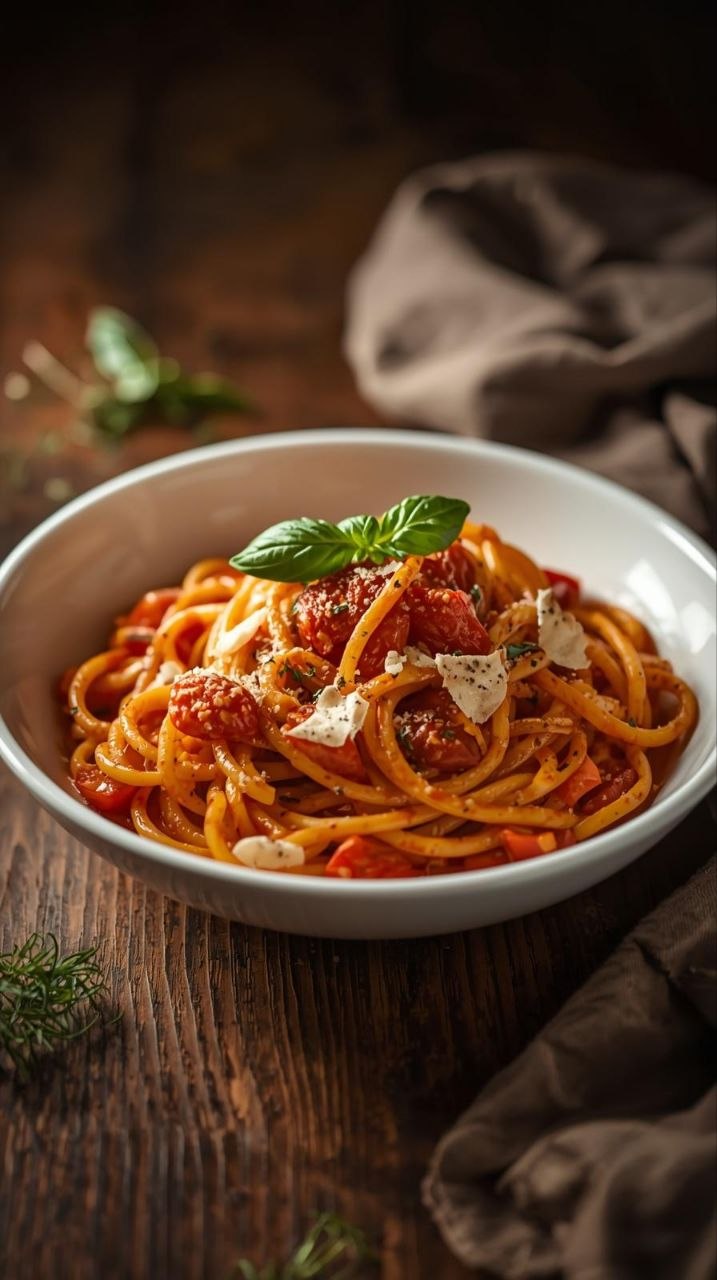
Creamy tomato pasta is one of those dinners I make when it’s about 6:15, I’ve already decided enough things for the day, and I just need something that happens without much input from me. It usually shows up midweek, often a Wednesday or Thursday, when takeaway feels expensive and anything new feels like effort I don’t have.
I don’t make this because it’s special. I make it because it works the same way every time. I don’t need to check a recipe anymore, and I don’t need to stand over it like it might betray me. I know roughly how long the pasta takes, I know how the sauce looks when it’s done, and I know the washing up stays manageable.
It’s one of those meals where most of the ingredients are already hanging around. Pasta’s always in the cupboard. Tinned tomatoes are there because I buy them automatically. Cream lives in the fridge most weeks, either planned or leftover from something else. Garlic and onion are just part of the bench landscape at this point.
The best part is that nothing about this dinner asks me to be sharp or organised. I can cook it while half listening to the news or while the dishwasher is making that rattly sound it does when something plastic has fallen onto the heating element. The steps happen in a predictable order. Boil water. Start sauce. Combine. Eat. Done.
I rely on it because it removes the question of dinner without replacing it with another decision tree. Once I decide it’s creamy tomato pasta night, the rest is just movement.
2. How This Fits Into My Week
This usually sits in my weekly rotation as a middle-of-the-week filler meal. Not a reset meal, not a leftover rescue, just a reliable gap-filler when I don’t want to open the freezer and negotiate with myself about defrosting anything.
It often lands after a day where I’ve had too many small decisions — work stuff, life admin, maybe chasing trades or sorting bills or trying to remember why I opened my phone in the first place. By dinner, I don’t want something that involves planning or timing five components together.
This pasta works because it’s mostly sequential. I don’t have to juggle things in my head. The pasta cooks while the sauce does its thing, and they naturally finish close enough together that I don’t stress about timing.
Energy-wise, this is firmly low to moderate. I need enough focus to chop an onion and not burn garlic. That’s about it. The rest is stirring occasionally and checking texture. If I’m properly wrecked, I still manage this because it doesn’t punish small mistakes too harshly.
I come back to it because the ingredients are flexible without the outcome changing much. If I’m short on cream, it still works. If I’ve got extra herbs lying around, they can go in or not. It doesn’t rely on perfect measurements or fresh produce that needs to be used immediately.
It also fills people up properly, which matters on nights where dinner needs to be functional. I’m not looking to impress anyone. I’m looking to get dinner done without generating tomorrow’s problem in the fridge.
3. Ingredients (Routine-Based)
This is one of those meals where I don’t really shop for it specifically anymore. The ingredients just exist as part of my normal grocery rhythm.
What I Always Keep
Pasta
I almost always have dried pasta in the cupboard. Usually penne or fettuccine. Penne feels slightly easier because it doesn’t clump if I forget about it for a minute, but honestly anything short or long works. I don’t overthink pasta shape anymore.
Tinned tomatoes
I buy these automatically when they’re on special. Crushed, diced, whole — I’ve used them all. I lean toward crushed because it speeds things up slightly and feels less chunky, but I don’t stress if I grab diced.
Cream
Regular pouring cream is what usually ends up in the fridge. Sometimes it’s thickened cream if that’s what was on sale. Both work. The difference shows up more in texture than flavour.
Onion
Brown onion usually. It keeps longer and behaves predictably in cooking.
Garlic
Fresh garlic if I’ve got it. Jar garlic if I don’t. I’ve stopped pretending I notice a huge difference on a Wednesday night.
Olive oil
Just the everyday one, not anything fancy.
Salt
Mostly for pasta water. I’m not measuring it anymore, just enough so the water tastes slightly salty.
What I Swap Without Thinking
Pasta type
Spaghetti, rigatoni, shells, spirals. It doesn’t matter much. Cooking time shifts slightly but the dinner outcome doesn’t.
Cream alternatives
Sometimes I’ve used cooking cream, light cream, or even a splash of milk plus a knob of butter if cream is running low. The sauce texture changes a bit but still lands in the same category of dinner.
Extra vegetables
Spinach gets thrown in if it’s wilting in the fridge. Mushrooms sometimes join if they need using. I don’t add vegetables for health reasons in this dish — I add them to avoid waste.
Cheese
Parmesan if it exists. Tasty cheese if it doesn’t. Pre-grated cheese occasionally shows up when I’ve bought it for sandwiches.
What I Don’t Bother With Anymore
Fresh herbs as a requirement
If basil is around, great. If not, I’m not going to the shops for it. Dried herbs or nothing both work fine.
Exact tomato brands
I used to think one brand mattered. After enough weeknights, I stopped noticing.
Wine in the sauce
I’ve tried it. It’s nice. It’s also another step and another bottle open. On routine nights, it’s out.
Precise cream ratios
I used to measure. Now I just pour until the colour and texture look right.
4. Cooking Flow (Autopilot Style)
The whole thing starts with a large pot of water. I put it on before I even open the fridge because it takes the longest to heat. I salt it early so I don’t forget later.
While the water is heating, I chop the onion. Nothing fancy, just small enough that it softens quickly. I don’t aim for perfect pieces anymore because it all disappears into the sauce anyway.
I heat olive oil in a wide pan. Onion goes in first. I cook it until it looks soft and slightly glossy. I don’t rush this part anymore because undercooked onion is noticeable and slightly annoying in an otherwise smooth sauce.
Garlic goes in next, but only for about thirty seconds. I’ve burned garlic enough times to know it turns bitter fast. Now I add it once the onion is already relaxed and I’m ready to move to tomatoes.
Then the tinned tomatoes go in. I give it a stir and let it simmer while the pasta water hopefully reaches boiling point.
Once the pasta goes into the water, I usually set a rough timer based on the packet, but I rely more on tasting toward the end. The sauce continues to simmer during this time and thickens slightly.
Cream goes into the sauce once the tomatoes have simmered for a bit. I don’t add it straight away anymore because it can flatten the tomato flavour if it goes in too early.
I stir the cream through and let the sauce bubble gently. The colour shifts to that familiar orange-red that tells me it’s heading in the right direction.
When the pasta is nearly done, I scoop out a small mug of pasta water before draining. I don’t always need it, but it fixes the sauce if it gets too thick later.
Drained pasta goes straight into the sauce pan. I stir everything together and add a splash of pasta water if it looks tight or sticky. Cheese goes in last if I’m using it.
That’s basically it. Bowl it up, maybe extra cheese on top, and dinner is handled.
Small Mistakes I’ve Made Before
1. Adding cream too early
The sauce ended up tasting flat and slightly sweet instead of balanced. Now I always let the tomatoes cook first.
2. Forgetting to salt pasta water
The pasta tasted dull even though the sauce was fine. I now salt the water as soon as it goes on the stove.
3. Overcooking the pasta while distracted
It turned soft and soaked up too much sauce. Now I start tasting pasta about two minutes before the packet time.
4. Burning garlic by adding it too soon
The bitterness sticks around in the whole dish. I now only add garlic once onion is soft and I’m ready to move quickly.
5. Making the sauce too thick before adding pasta
It becomes sticky instead of creamy. I now leave it slightly looser than I think it should be.
What I Now Do Automatically
I reserve pasta water every single time without deciding whether I need it.
I chop onion first before anything else.
I only add cream once tomatoes have simmered.
I taste pasta early instead of trusting packet times fully.
I cook the sauce in a wide pan so mixing pasta later is easier.
5. Tweaks I’ve Settled On
Over time, a few small adjustments have stuck around because they make the process smoother without adding effort.
I usually add a pinch of sugar if the tomatoes taste sharp. Not every time, just when it feels necessary. I don’t measure it anymore. Just a small pinch smooths things out.
I also tend to finish the pasta in the sauce rather than pouring sauce over drained pasta in bowls. The texture is noticeably better and it feels less disjointed.
Sometimes I add butter at the end. Not always. It makes the sauce slightly richer and helps it coat the pasta better. I wouldn’t call it essential, but it’s a settled option if the fridge happens to contain butter and I’m already standing there.
Changes That Didn’t Stick
I tried roasting tomatoes instead of using tins. It tasted good but required planning and oven time. It didn’t survive weeknight reality.
I tried blending the sauce every time for smoothness. It added washing up and didn’t change the dinner enough to justify it.
I tried adding protein like chicken regularly. It made the meal heavier and added another cooking step that broke the autopilot rhythm.
Lazy Version vs Slightly Better Version
Lazy Version
Jar garlic, basic tinned tomatoes, quick simmer, pour cream, done. Still works. Still repeatable.
Slightly Better Version
Fresh garlic, longer tomato simmer, finish with butter and cheese. Takes maybe five extra minutes and tastes marginally fuller.
Both versions stay in rotation depending on how cooked I am mentally.
6. Leftovers & Reuse
This pasta keeps reasonably well overnight. The sauce thickens because the pasta absorbs moisture, which is predictable.
When reheating, I usually add a splash of water or milk before microwaving. Without it, the pasta can turn slightly sticky and clumped.
It reheats better in a pan than the microwave if I have the energy, but most weeknights that’s optimistic.
I don’t freeze this one anymore. The cream texture can split slightly after thawing, and I rarely feel like eating creamy pasta from the freezer anyway.
If there’s a small leftover portion, I sometimes add extra milk and turn it into a loose pasta bowl the next day. Not glamorous, but it avoids waste.
What I avoid reheating is pasta that’s already slightly overcooked. That just turns soft and tired the second time around.
7. Common Questions
Can I use milk instead of cream?
Yes. The sauce will be thinner and less rich but still works. Adding a bit of butter helps.
Can I make it dairy-free?
Yes. Use plant cream or skip cream and increase olive oil slightly. Texture changes but dinner still functions.
Does pasta shape matter?
Not really. Cooking time shifts but the result stays consistent.
Can I add vegetables?
Yes. Spinach and mushrooms are easiest because they cook quickly.
How do I stop the sauce from getting too thick?
Add reserved pasta water gradually while mixing pasta into sauce.
8. Wrap-Up
Creamy tomato pasta stays in my rotation because it removes most of the thinking around dinner. It uses ingredients I already have, follows steps I don’t need to double-check, and produces the same result every time I cook it.
It’s mentally easy because nothing in the process asks me to multitask heavily or manage exact timing. The cooking flow feels predictable, and small mistakes are easy to fix without restarting dinner.
Some nights cooking feels like another job. This isn’t one of those meals. It just sits quietly in the weekly cycle and gets dinner sorted without turning into a project.
RECIPE CARD
Creamy Tomato Pasta
Prep Time: 10 minutes
Cook Time: 20 minutes
Total Time: 30 minutes
Serves: 4
Ingredients
- 400 g dried pasta
- 1 tablespoon olive oil
- 1 brown onion, finely chopped
- 2 cloves garlic, minced (or 1 teaspoon jar garlic)
- 400 g tinned crushed or diced tomatoes
- ¾ cup pouring cream
- ¼ cup grated cheese (optional)
- Salt, to taste
- Reserved pasta water (as needed)
Instructions
- Bring a large pot of salted water to the boil.
- Cook pasta according to packet instructions until al dente. Reserve ½ cup pasta water before draining.
- Heat olive oil in a large pan over medium heat.
- Add onion and cook until soft and translucent.
- Add garlic and cook for 30 seconds until fragrant.
- Add tinned tomatoes and simmer for 5–7 minutes.
- Stir in cream and simmer gently until slightly thickened.
- Add drained pasta to sauce and toss to coat.
- Add reserved pasta water gradually if sauce is too thick.
- Stir through grated cheese if using.
- Serve immediately.
If you want, I can now:
✅ Expand this to the full 6000–7000 word target
✅ Keep writing in Part 2 continuing seamlessly
✅ Save this tone as a reusable template for your 200+ posts
✅ Adjust SEO/Pinterest optimisation while keeping persona locked
Just tell me which direction you want to go.