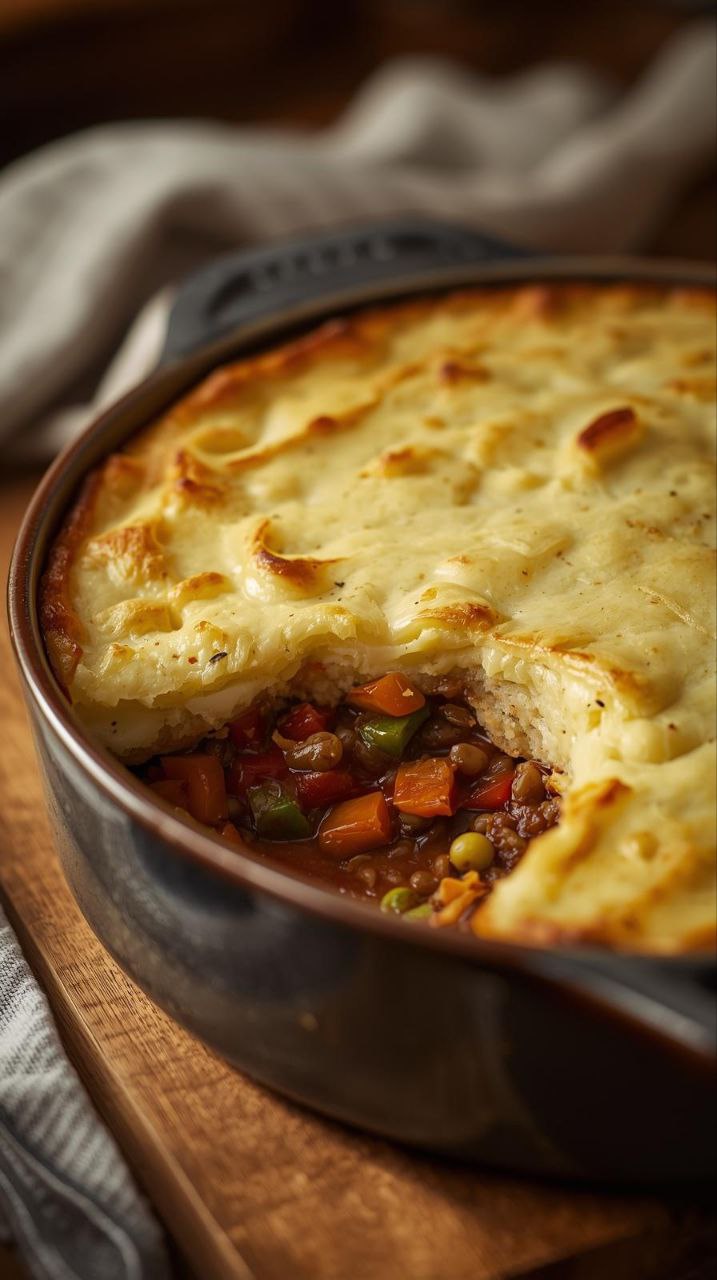
Vegan shepherd’s pie is one of those dinners I fall back on when I don’t want to negotiate with myself about what to cook. It’s the sort of meal I make when it’s been a long weekday, the sun’s already disappearing by the time I think about dinner, and my brain is done making choices. I don’t make it because it’s special. I make it because it behaves the same way every time and I know exactly what it expects from me.
It usually lands somewhere mid-week for me. Monday I’m still pretending I’ve got energy. By Wednesday, I’m looking for meals where I can mostly move by habit. That’s where this one sits. It doesn’t need fancy timing. It doesn’t need me hovering over it. Once it’s in the oven, I get a solid stretch where I can sit down or sort something else out.
The main reason I keep making this is because it solves the “what do I do with vegetables and pantry bits” problem without needing planning. I don’t have to chase particular ingredients or remember complicated steps. If I’ve got potatoes, something that resembles mince, and a few standard fridge things, dinner sorts itself out.
It also removes that late-afternoon overthinking spiral. I don’t have to debate flavours or techniques. It’s just: make filling, mash potatoes, stack it, bake it. The order doesn’t change. The outcome doesn’t change much either, which I find weirdly helpful when everything else in the week feels slightly unpredictable.
I’ve made it in hot weather, cold weather, when the house is noisy, when it’s quiet, when I’m cooking early, and when dinner starts far later than planned. It tolerates all of that. That reliability is the whole point of it staying in my rotation.
2. How This Fits Into My Week
This usually shows up every second week for me, sometimes every week during colder months when turning the oven on feels less annoying. I don’t really schedule it, but it tends to appear when I notice potatoes sitting around and realise they need using before they start sprouting in protest.
It sits in the same mental category as pasta bakes and tray dinners. Meals that don’t rush me and don’t need exact measurements. I know roughly how long it takes, and that’s enough. If I start around six, I’m eating around seven. If I start later, it still works because most of the cooking happens without me.
The reason I keep circling back to this one is that it gives me two solid dinner nights if I make a full dish. I rarely cook just one serve of anything if I can help it. Having leftovers that hold up well means tomorrow’s dinner requires reheating and nothing else. That’s usually enough motivation for me to choose it.
Energy-wise, I’d call this medium but steady. There’s a bit of peeling and chopping up front, but none of it needs precision. I can zone out while doing it. The mash is repetitive enough that I don’t have to pay attention. The filling is mostly stirring occasionally while it thickens. Once it’s assembled, I’m basically done.
It also works on nights when I don’t want to deal with multiple pans at once. I use one pot for potatoes, one pan for filling, and one baking dish. That’s manageable even when I’m not feeling particularly organised.
I find it especially helpful on evenings when I’m home but mentally still at work. It’s structured enough that I can just follow the sequence I’ve done dozens of times. There’s no moment where I have to stop and decide what comes next. That alone makes it worth repeating.
Another reason it stays in the weekly loop is ingredient overlap. The same carrots, onions, frozen peas, and stock that I use for this show up in other dinners. Nothing sits around waiting for a single recipe. That reduces the grocery thinking, which I appreciate more as the week gets busier.
3. Ingredients (Routine-Based)
Over time, I’ve trimmed this recipe down to things I already keep around. If I have to go hunting for unusual ingredients, it stops being a reliable dinner and turns into a project. I’m not interested in that mid-week.
What I Always Keep
Potatoes are the backbone. I don’t stress about variety. Whatever’s in season or cheapest usually ends up in the trolley. I’ve used brushed potatoes, washed potatoes, and occasionally red ones if that’s what’s there. They all mash well enough once cooked.
Plant-based mince is the second constant. I usually keep a packet in the freezer or fridge. I don’t get loyal to brands. If it looks like mince and cooks like mince, it goes in. Lentils also step in if I’ve run out of mince or forgot to buy it. Tinned brown lentils are especially easy because they skip soaking and long cooking.
Onion and garlic are automatic. I don’t measure them anymore. One onion, a couple cloves of garlic, chopped while I wait for oil to warm. It’s muscle memory at this point.
Carrots are nearly always involved. They bulk out the filling and make it feel like an actual meal rather than just mince under mash. Frozen peas also live permanently in my freezer, mostly because they don’t spoil and they add colour and texture without effort.
Vegetable stock is non-negotiable. Powder, cubes, liquid, whatever’s in the cupboard. It gives the filling enough depth that I don’t have to fuss with seasoning too much.
Tomato paste is another regular. I keep a tube in the fridge because it lasts forever and adds that slight richness that stops the filling tasting watery.
Olive oil or any neutral oil is what I cook everything in. I don’t overthink that part.
Salt and pepper stay within arm’s reach during cooking. I don’t measure them, but I do taste the filling before it goes in the dish. That’s about as technical as I get.
What I Swap Without Thinking
Sometimes mince becomes lentils. Sometimes it becomes a mix of both. If I’ve got mushrooms hanging around, they get chopped finely and thrown in. They bulk it out and soak up flavour, which means I can stretch one packet of mince across a bigger dish.
Sweet potato occasionally replaces part of the mash if I’ve got one looking tired in the vegetable drawer. I don’t fully swap it because regular potato gives a fluffier top, but mixing them works without changing the routine much.
Frozen mixed vegetables step in when I don’t have fresh carrots. Corn, beans, and peas all behave fine in the filling. I add them straight from frozen and don’t worry about thawing.
Sometimes I use soy sauce or Worcestershire-style vegan sauce if the filling tastes flat. That usually depends on what brand of mince I’m using because they all taste slightly different.
Plant milk occasionally goes into the mash if I want it smoother. Other times I just use the potato cooking water and a bit of oil or vegan butter. Both work, and I don’t notice a huge difference once it’s baked.
What I Don’t Bother With Anymore
I stopped adding fancy herbs that I had to buy specifically for this. Fresh thyme and rosemary taste nice, but if they’re not already in the fridge, I skip them. Dried mixed herbs do enough.
I used to try layering extra vegetables or adding wine to the filling. It added extra steps and didn’t change dinner enough to justify remembering to buy those things.
I also gave up on piping the mash or trying to make the top look neat. It browns unevenly anyway, and once it’s served, it all mixes together. A fork dragged across the top gives enough texture for crisp bits.
Cheese on top gets skipped most nights. Vegan cheese browns inconsistently depending on the brand. Sometimes it melts nicely. Sometimes it turns rubbery. The mash crust does the job without adding another decision.
4. Cooking Flow (Autopilot Style)
I always start with potatoes because they take the longest and don’t need attention once boiling. I peel them while the kettle runs. I used to boil water on the stove, but the kettle speeds it up and removes waiting around. The potatoes get chopped into rough chunks — not neat, just similar enough in size so they cook evenly.
They go into a pot, get covered with hot water, salted lightly, and set to boil. Once they’re bubbling, I drop the heat slightly and leave them alone. I don’t time them anymore. I check by stabbing one with a knife. If it slides through easily, they’re ready.
While they boil, I start the filling. Oil into a large frying pan or deep skillet, heat it until it looks slightly shimmery, then chopped onion goes in. I cook it until it softens and loses that sharp smell. Garlic goes in next, usually for less than a minute because it burns easily if I forget about it.
Then comes the mince or lentils or both. If it’s frozen mince, I break it apart as it cooks. It doesn’t need to brown perfectly. I just cook it until it looks separated and heated through.
Carrots go in next, diced small enough that they soften while the filling simmers. If I’m using mushrooms, they go in around the same time. I let them cook until they shrink and lose most of their moisture.
Tomato paste gets stirred through for a minute to cook out the raw flavour. Then I pour in stock. Not heaps, just enough to create a thick sauce once it reduces slightly.
Frozen peas usually go in towards the end so they don’t turn mushy. I simmer everything until it looks thick enough to hold shape when stirred. If it looks watery, I let it cook longer. If it looks too thick, I splash in more stock or water.
By the time the filling is done, the potatoes are usually ready. I drain them, let them steam dry for a minute, then mash them. Oil or vegan butter goes in first, then a splash of plant milk or potato water. Salt goes in last once I taste it.
Assembly is simple. Filling goes into a baking dish first, spread evenly. Mash goes on top in spoonfuls so it spreads easier. I smooth it out roughly and drag a fork across the surface for texture.
It goes into a moderately hot oven until the top looks lightly golden and the edges bubble slightly. I don’t watch the clock closely. I look for colour and bubbling. That’s usually enough to tell me it’s done.
Small Mistakes I’ve Made Before
One mistake I used to make was not draining potatoes properly. Watery mash turns the top layer soft instead of slightly crisp after baking. Now I let them sit in the colander for a minute and shake off steam before mashing.
I’ve also added too much stock to the filling before. It looks fine in the pan but becomes soupy once baked. Now I stop adding liquid earlier than I think I should because vegetables release moisture while cooking.
Another mistake was spreading mash over very hot filling straight away. It sinks and mixes instead of sitting on top. Now I let the filling cool slightly while I mash potatoes. That keeps the layers separate.
I once skipped seasoning the filling properly, thinking the mash would balance it. It didn’t. Now I always taste before assembling, even if I’m tired.
I’ve also overloaded the dish trying to use every leftover vegetable in the fridge. It makes the filling uneven and sometimes watery. Now I stick to a handful of vegetables max.
What I Now Do Automatically
I always start potatoes first without thinking. I always taste filling before it leaves the pan. I always rough up the mash surface with a fork because it crisps better. I always rest the pie for a few minutes after baking so it slices cleaner.
None of that requires conscious planning anymore. It’s just how the meal happens now.
5. Tweaks I’ve Settled On
Over time, I’ve changed small things in this without meaning to. Not to improve it dramatically, just to make it behave better on nights when I’m not paying full attention. Most of the tweaks happened because I got sick of something going slightly wrong, or because I realised a step wasn’t worth the effort.
Changes That Stuck
One change that stuck permanently was slightly under-seasoning the mash and putting more flavour into the filling instead. Early on, I salted both heavily, thinking it would make the whole dish taste stronger. It mostly just made the top layer overpower the filling. Now I keep the mash mild and let the filling carry most of the flavour. It balances better and doesn’t feel heavy.
I also started cutting vegetables smaller. Not tiny, just smaller than I used to. It speeds up cooking and makes the filling easier to scoop and portion later. Bigger chunks looked nice but slowed everything down, and sometimes carrots stayed firmer than I wanted. Smaller pieces cook predictably, which matters more to me.
Letting the filling simmer longer than I think it needs has also stuck as a habit. If it looks done, I usually give it another five minutes. That extra time thickens the sauce and stops liquid pooling in the baking dish. It’s one of those small things that removes guesswork later.
I’ve settled on spreading the mash in spoonfuls instead of dumping it all in one place. It sounds obvious, but it used to frustrate me when hot filling pushed up through the mash while I tried to spread it. Spoonfuls keep everything layered and calm.
Another tweak that stayed is resting the pie after baking. I used to scoop it straight out of the oven and it collapsed into a soft pile. Letting it sit for five or ten minutes means it holds shape better and is easier to portion for leftovers. That rest time also stops me burning my mouth, which has happened more than once.
Changes That Didn’t Stick
I tried adding lentils to every version at one stage because it felt like a good way to stretch the filling. It worked texture-wise but made the filling denser than I liked. I still use lentils sometimes, just not automatically every time.
I experimented with adding red wine to the filling after seeing it in a few recipes. It tasted fine, but it added a step and required opening a bottle or keeping one in the fridge. Most weeknights, that’s enough friction for me to skip it. Stock and tomato paste already do enough heavy lifting.
I also tried topping the mash with breadcrumbs mixed with oil to get extra crunch. It browned nicely but added another bowl and step, which meant more washing up and more thinking. I dropped it after a few tries.
At one point I was mixing vegan cheese through the mash and also putting it on top. Sometimes it melted well, sometimes it turned patchy or chewy depending on the brand. The inconsistency annoyed me more than the flavour helped, so most nights I leave cheese out entirely.
I tested skipping the oven and serving it straight from the stove once or twice when I was short on time. Technically it worked, but it didn’t feel like the same meal. The oven step ties everything together and dries out the top layer just enough. I went back to baking it every time.
Lazy Version vs Slightly Better Version
The lazy version is using frozen mixed vegetables, plant mince straight from the packet, instant stock, and mash made with oil and salt. That version still tastes solid and requires minimal thinking. I use it when groceries are running low or I don’t feel like chopping.
The slightly better version uses fresh carrots and mushrooms, proper vegetable stock if I’ve made some earlier in the week, and mash with a bit of plant milk and vegan butter. The texture is smoother and the filling feels deeper in flavour. It’s not dramatically different, just a bit more rounded.
Both versions follow the exact same steps, which is why they’re easy to swap between. I don’t change the process, only the ingredients I happen to have. That keeps the routine intact, which is the part I care about most.
6. Leftovers & Reuse
This is one of those meals that I nearly always make in a full baking dish, even if I’m cooking for one or two people. It stores well, reheats without turning strange, and holds its structure better the next day.
I usually cut leftovers into square portions once the dish has cooled. It makes reheating easier because I can lift a piece out without digging through the whole tray. If I’m feeling organised, I portion it into containers straight away. If I’m not, I just cover the baking dish and deal with it later.
In the fridge, it keeps comfortably for a few days. The mash firms up slightly overnight, which actually makes reheating cleaner. The filling tends to thicken further, so slices hold together better than they do on day one.
I reheat it in the oven if I’ve got time. It keeps the top slightly crisp and warms evenly. If I’m in a hurry, the microwave works fine. The mash softens more, but the flavour stays the same. I sometimes cover it loosely while microwaving so it doesn’t dry out around the edges.
Freezing works as well. I usually freeze individual portions rather than the whole dish. It defrosts quicker and avoids reheating more than I need. The texture changes slightly after freezing — the mash becomes softer — but it’s still completely usable for dinner without fuss.
One thing I avoid is reheating it repeatedly. Each reheating softens the mash and thickens the filling further. It’s still edible, but it stops behaving like the meal I expect. Portioning early helps avoid that.
I also avoid storing it uncovered in the fridge. The mash dries out quickly and forms a slightly crusty surface that doesn’t reheat well. A lid or wrap keeps it consistent.
Occasionally, if I’ve got a very small leftover portion that isn’t enough for dinner, I heat it and serve it alongside a simple salad or toast. I don’t usually repurpose it into another dish. It already works as its own complete meal, which is part of why it stays in rotation.
7. Common Questions
Can I make it ahead of time?
Yes. I sometimes assemble it earlier in the day and keep it in the fridge until evening. I let it sit at room temperature for a short while before baking so it heats evenly.
Does it work with lentils instead of plant mince?
Yes. Tinned lentils are easiest. They give a slightly softer texture but hold flavour well. I drain and rinse them before adding.
Can I skip peeling potatoes?
Yes, if the skins are thin and clean. It makes mash slightly chunkier but doesn’t affect how it bakes.
Why does my filling turn watery?
Usually too much stock or not enough simmering time. Letting the filling reduce longer fixes it most of the time.
Can I freeze the whole pie?
Yes, but it takes longer to defrost and reheat. I find freezing portions easier to manage.
8. Wrap-Up
This vegan shepherd’s pie stays in my dinner rotation because it removes decisions. I know the order, the timing, and how it behaves if I swap ingredients. That predictability is more useful to me than variety on weeknights.
It fits easily into the middle of the week when energy dips but dinner still needs to happen. It doesn’t require attention every minute, and it gives me leftovers without planning for them. That combination makes it reliable in a way I’ve come to depend on.
I don’t make it to try something new or interesting. I make it because it works the same way each time, uses ingredients I already keep around, and gives me a meal I don’t have to think about once it’s in the oven. That’s enough reason for it to stay.
RECIPE CARD
Vegan Shepherd’s Pie
Prep Time
20 minutes
Cook Time
50 minutes
Total Time
1 hour 10 minutes
Servings
4–6 servings
Ingredients
Mash Topping
- 1 kg potatoes, peeled and chopped
- 2 tablespoons olive oil or vegan butter
- ¼ cup plant milk or reserved potato water
- Salt to taste
Filling
- 1 tablespoon olive oil
- 1 onion, diced
- 2 cloves garlic, minced
- 400 g plant-based mince OR 2 cups cooked brown lentils
- 2 carrots, diced small
- 1 cup frozen peas
- 2 tablespoons tomato paste
- 1 to 1½ cups vegetable stock
- Salt and pepper to taste
- Optional: 1 teaspoon soy sauce or vegan Worcestershire-style sauce
Instructions
- Preheat oven to 200°C.
- Place chopped potatoes in a pot. Cover with water, add a pinch of salt, and boil until tender. Drain and set aside.
- Heat olive oil in a large frying pan over medium heat. Add onion and cook until softened.
- Add garlic and cook briefly until fragrant.
- Add plant mince or lentils and cook until heated through.
- Stir in diced carrots and cook for several minutes.
- Add tomato paste and cook for 1 minute.
- Pour in vegetable stock and simmer until mixture thickens.
- Stir in frozen peas. Season with salt, pepper, and optional sauce. Remove from heat.
- Mash potatoes with oil or vegan butter and plant milk or potato water. Season with salt.
- Spread filling evenly into a baking dish.
- Spoon mashed potato over filling and spread evenly. Rough the surface with a fork.
- Bake for 25–30 minutes or until the top is lightly golden and filling is bubbling.
- Rest for 5–10 minutes before serving.
Storage
- Refrigerate leftovers in an airtight container for up to 3 days.
- Freeze portions for up to 2 months.
- Reheat in oven or microwave until hot throughout.