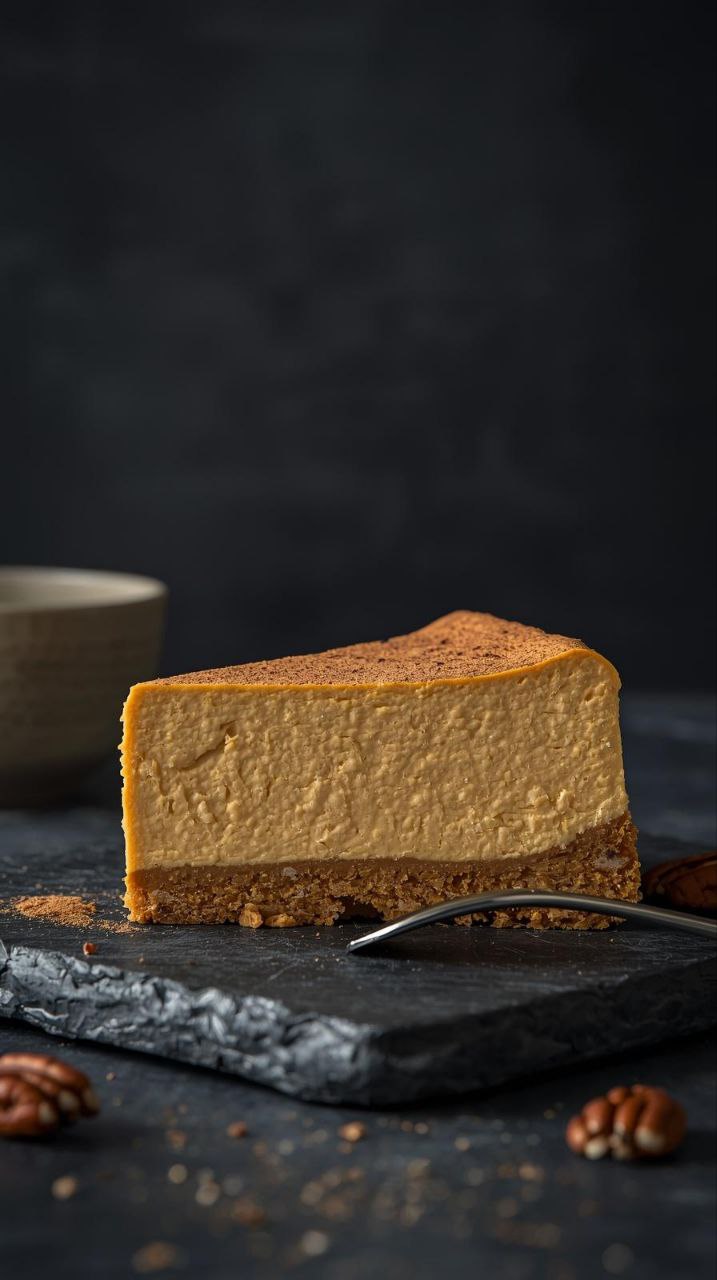
Vegan pumpkin cheesecake is something I usually make when the weather cools off a bit and I’m craving dessert but don’t feel like doing anything too fiddly. It’s the sort of thing I’ll throw together on a Saturday afternoon when I’m pottering around the kitchen anyway, or sometimes on a Sunday if I’ve realised I want something decent in the fridge for the week.
It’s useful because it feels like proper dessert without being a full production. I don’t need fancy ingredients, and it sits in the fridge doing its thing while I forget about it. It’s also one of those desserts that somehow tastes better the next day, which suits me fine because I’m rarely patient enough to fuss over desserts right before serving.
I started making vegan pumpkin cheesecake mostly because I had leftover pumpkin once and didn’t feel like soup again. Turns out it works surprisingly well in cheesecake. Adds a bit of body, mild sweetness, and saves me from using too many expensive ingredients.
How This Fits Into My Week
I’m not making cheesecake midweek unless I’ve got unusual levels of energy, which honestly doesn’t happen often after work. Most weeknights I’m just trying to get dinner sorted and maybe watch something while sitting down for five minutes.
This one fits better into weekends, especially if I’m already cooking something else and the kitchen is messy anyway. It doesn’t take heaps of active effort, but it does involve blending, baking, cooling, and chilling, which means it’s more of a background project than a quick whip-up.
If it’s a cooler day, I’m way more likely to make it. Running the oven when it’s already hot outside feels like a bad life choice. Autumn and winter are prime cheesecake seasons at my place. I’ll usually make it earlier in the day, leave it to cool while I do other stuff like laundry or scrolling recipes I probably won’t cook, then shove it in the fridge overnight.
Energy-wise, it sits somewhere in the middle. Not lazy toast-level cooking, but also not “I need total concentration and silence” cooking. I can still listen to a podcast and half pay attention.
Ingredients
I don’t treat this vegan pumpkin cheesecake like a strict formula. It’s more of a framework that tolerates swaps pretty well.
Essentials I Always Use
- Pumpkin (roasted or steamed)
- Vegan cream cheese
- Something creamy like coconut cream or cashews
- Sugar of some sort
- Biscuit base
- Vegan butter or coconut oil for the base
- Cornflour or similar thickener
- Vanilla
- Pinch of salt
Base Options I Rotate Between
- Plain digestive biscuits
- Arnott’s Nice biscuits
- Any leftover sweet biscuits in the pantry
- Sometimes oats mixed with crushed biscuits if I’m short
Sweetener Options
- White sugar is easiest
- Brown sugar if I want a slightly deeper flavour
- Maple syrup works but can make it softer
- I’ve used icing sugar when that’s all I had
Creamy Elements I Swap Around
- Coconut cream (most common at my place)
- Soaked cashews blended smooth
- Store-bought vegan pouring cream
- Occasionally silken tofu when I’m low on everything else
Spices (Optional But Nice)
- Cinnamon
- Nutmeg
- Ginger powder
- Sometimes pumpkin spice blend if I’ve got it lying around
Things I Sometimes Skip
- Lemon juice — nice but not essential
- Extra toppings — depends on mood
- Fancy biscuit base additions
Realistically, I use whatever pumpkin I’ve already got. Butternut works well because it’s naturally smooth, but I’ve used Kent pumpkin plenty of times too.
4. Cooking Flow (NOT Instructions)
I usually start by sorting the pumpkin first because that takes the longest to cool down. If I’m organised, I roast chunks of pumpkin earlier in the day. If I’m not organised, which is fairly normal, I’ll chop it up, throw it in the oven with a bit of oil, and forget about it until the edges start catching colour and the kitchen smells slightly sweet.
I used to steam pumpkin for this, but I found it sometimes made the filling too watery. I didn’t realise that at first and ended up with a cheesecake that never properly set. It looked fine until I sliced it and the middle just sort of relaxed into a puddle. Now I roast it most of the time because it dries it out a bit and gives better flavour.
While the pumpkin cools, I usually deal with the base. Crushing biscuits is one of those jobs that sounds simple but somehow creates chaos if I’m tired. I’ve split ziplock bags more than once because I get impatient and hit them too hard with a rolling pin. Biscuit crumbs everywhere is extremely annoying. These days I double-bag or just use the food processor and accept the washing up later.
I mix the crumbs with melted vegan butter or coconut oil until it looks like damp sand. I used to guess this part and once made a base that basically disintegrated the moment I tried slicing the cheesecake. Another time I added too much oil and it turned into a greasy brick. Now I mix slowly and stop once it clumps together when pressed.
Pressing the base into the tin is something I used to rush. That led to uneven thickness and corners that crumbled. Now I just use the bottom of a glass and push it around until it looks reasonably flat. Still not perfect, but it holds together better.
Once the base is in the fridge firming up, I move onto the filling. Everything goes into the blender or food processor. Pumpkin, vegan cream cheese, sweetener, coconut cream, vanilla, salt, and thickener.
This is where I’ve made several mistakes over time.
One time I blended while the pumpkin was still warm. I didn’t think it mattered, but it softened the cream cheese too much and the filling turned overly loose. The cheesecake still worked but took ages to set and the texture wasn’t great. Now I wait until the pumpkin is fully cooled, even if that means walking away for a bit.
Another mistake was under-blending cashews when I used them. Tiny gritty bits throughout the cheesecake is not ideal. I now soak cashews longer than I think necessary and blend until it’s completely smooth. If I think it’s smooth, I blend it a bit more anyway.
I’ve also forgotten to scrape down the sides of the blender before, which left random pockets of plain pumpkin or cream cheese. You don’t notice until slicing later and suddenly there’s a streak of something oddly textured.
Once the filling looks smooth and thick but still pourable, I taste it. I don’t measure sweetness exactly. If it tastes slightly sweeter than I want, I leave it because it dulls down after baking and chilling.
Pouring it into the base is usually straightforward unless I’ve overfilled the tin, which I’ve absolutely done. Trying to shuffle a full cheesecake into the oven without spilling it is stressful and I do not recommend learning that lesson the hard way like I did.
Baking is mostly a waiting game. I check it occasionally. I look for edges that look set but a middle that still has a small wobble. I used to bake until the centre was fully firm because I assumed that meant done. That gave me dry cheesecake with cracks across the top. Now I stop earlier and let it finish setting while cooling.
Cooling is probably the hardest part purely because I’m impatient. I once tried moving it to the fridge while still warm and condensation dripped onto the surface and made it patchy. Now I leave it on the bench until it’s room temp, even if it annoys me.
Then it goes in the fridge overnight. I’ve tried cutting it early multiple times and it always ends the same way: messy slices and mild disappointment.
5. Tweaks I’ve Used
Protein swaps don’t really apply the same way they do in savoury cooking, but I have changed the creamy base quite a bit depending on what’s in the pantry.
Cashew-based versions come out slightly firmer and richer. Coconut cream versions are softer but still good and way easier because there’s no soaking or heavy blending required.
I’ve made a lighter version using part silken tofu and part vegan cream cheese. That worked better than expected. Slightly less rich but still very decent, especially if I’m planning to eat it across several days.
For sweetness, I sometimes reduce sugar and add maple syrup. It makes it feel slightly less heavy, though it can soften the structure a bit.
Lazy version is definitely using store-bought vegan cream cheese and canned coconut cream with a simple biscuit base. Effort version is soaking cashews, roasting pumpkin properly, and adding spices.
I wouldn’t call either better. Just depends how much patience I’ve got that day.
6. Leftovers & Reheating
Leftover vegan pumpkin cheesecake is honestly part of the reason I bother making it in the first place. It’s one of those desserts that settles into itself after sitting in the fridge for a while. Freshly chilled is good, but day two is usually better at my place.
The texture firms up overnight, which makes slicing easier and less messy. When I’ve cut it too early, the slices tend to lean sideways or stick to the knife like they’re trying to escape. By the next day, it holds shape properly and feels more like actual cheesecake rather than pumpkin filling pretending to be dessert.
I keep it in the fridge in whatever container I can fit the slices into. If I’m feeling organised, I transfer slices into an airtight container. If I’m not, I just cover the tin with foil and hope no one bumps into it.
It keeps well for about four to five days in my experience. Around day four, the base can start softening slightly, especially if it’s been sitting under a moist filling. Still edible, just not as crisp.
The flavour deepens a bit over time. The pumpkin and spices mellow together, and the sweetness feels less sharp. I actually prefer it slightly older, which sounds questionable but works here.
Freezing is something I’ve done a few times, usually when I made a bigger cheesecake than I realistically needed. It freezes surprisingly well if sliced first. I wrap slices individually or layer them between baking paper in a container.
Thawing is easy. I just move a slice to the fridge and forget about it for several hours. It comes back with only a slight change in texture. Maybe a tiny bit softer, but still very decent.
I don’t reheat it. Cheesecake, especially vegan pumpkin cheesecake, just isn’t meant for warming up. I did try microwaving a slice once out of curiosity. It turned slightly rubbery and weirdly glossy on top. Not dangerous, just not pleasant. Cold or cool room temperature is definitely better.
If I want to change it up when serving leftovers, sometimes I add a spoonful of coconut yoghurt or a drizzle of maple syrup. Not necessary, just something different if I’m getting bored with the same slice every night.
7. Common Questions
Can I use canned pumpkin instead of fresh?
Yeah, absolutely. I’ve done it plenty of times. Just make sure it’s plain pumpkin puree and not pumpkin pie filling. The canned version usually has a smoother texture, which actually helps the filling.
Does it taste strongly like coconut if I use coconut cream?
A little bit, but not in an overpowering way. The pumpkin and spices balance it out. If coconut isn’t your thing, cashews or vegan cream alternatives work fine.
Why did my cheesecake crack on top?
Usually from baking too long or cooling too quickly. I used to leave mine in until it looked fully set in the middle, which caused cracking. Now I pull it out when there’s still a slight wobble.
Can I make vegan pumpkin cheesecake gluten free?
Yep. I’ve used gluten free biscuits for the base before and it worked exactly the same. Just crush and mix like normal.
Do I have to chill it overnight?
You don’t have to, but it’s a lot better if you do. I’ve sliced it after only a few hours and it never holds as nicely. Overnight chilling makes a noticeable difference.
8. Wrap-Up
I keep coming back to vegan pumpkin cheesecake because it sits in that comfortable middle ground between effort and reward. It feels like proper dessert without turning the kitchen into a disaster zone or requiring ingredients I’ll never use again.
It’s reliable once you get a feel for it. Pumpkin gives the filling body, the biscuit base keeps it simple, and the fridge does half the work while I get on with other stuff. I don’t need it to look perfect or bakery-level. I just need it to taste good and slice without falling apart.
It’s also one of those things that works quietly in the background of the week. Make it once, and there’s dessert sorted for days. No stress, no rushing around before serving, and no weird last-minute cooking panic.
Some weekends I put more effort into it, roasting pumpkin properly and blending everything extra smooth. Other times I just use whatever’s in the pantry and it still turns out solid. That flexibility is probably why it stays in my rotation.
Recipe Card
Vegan Pumpkin Cheesecake
Prep Time: 25 minutes
Cook Time: 55 minutes
Chilling Time: 6–8 hours or overnight
Servings: 8 slices
Ingredients
Base
- 250g sweet biscuits (digestive or similar)
- 100g vegan butter or coconut oil, melted
Filling
- 2 cups roasted pumpkin puree (cooled)
- 400g vegan cream cheese
- ¾ cup sugar (white or brown)
- ¾ cup coconut cream
- 2 tablespoons cornflour
- 1 teaspoon vanilla extract
- Pinch of salt
- 1 teaspoon cinnamon (optional)
- ¼ teaspoon nutmeg (optional)
Method
- Preheat oven to 160°C.
- Crush biscuits into fine crumbs and mix with melted vegan butter.
- Press mixture into a lined springform tin and chill.
- Blend all filling ingredients until smooth.
- Pour filling over base.
- Bake until edges are set and centre has slight wobble.
- Cool to room temperature, then refrigerate until firm.
- Slice and serve chilled.